Water Softener Installation in Essex

Protect your home from hard-water scale, from £800.

Water Softeners in Essex

Thomas installs water softeners across Essex, Hertfordshire and London, covering Stansted, Bishop's Stortford, Harlow, Saffron Walden and the surrounding area. Essex and the wider London area have some of the hardest water in England. If you can see scale building around your taps or inside your kettle, the same thing is happening inside your boiler, your washing machine and your hot water cylinder. A water softener stops that process.

Hard water contains dissolved calcium and magnesium minerals. When water is heated, those minerals precipitate out and form limescale. Over time, limescale builds up inside heating systems, hot water cylinders and household appliances, reducing their efficiency and shortening their working life. A water softener removes the calcium and magnesium before the water reaches your plumbing. The result is water that doesn't scale up, which means appliances run more cleanly and boilers run more efficiently.

Most homeowners notice the difference within a few weeks. Heating systems that have been dealing with limescale start to run more efficiently. Shower screens and taps stop showing scale deposits. Dishwashers and washing machines need less detergent. In Essex, where water hardness is well above the national average, the long-term protection a softener provides is particularly relevant. Hot water cylinders and boilers that might otherwise need early replacement last longer.

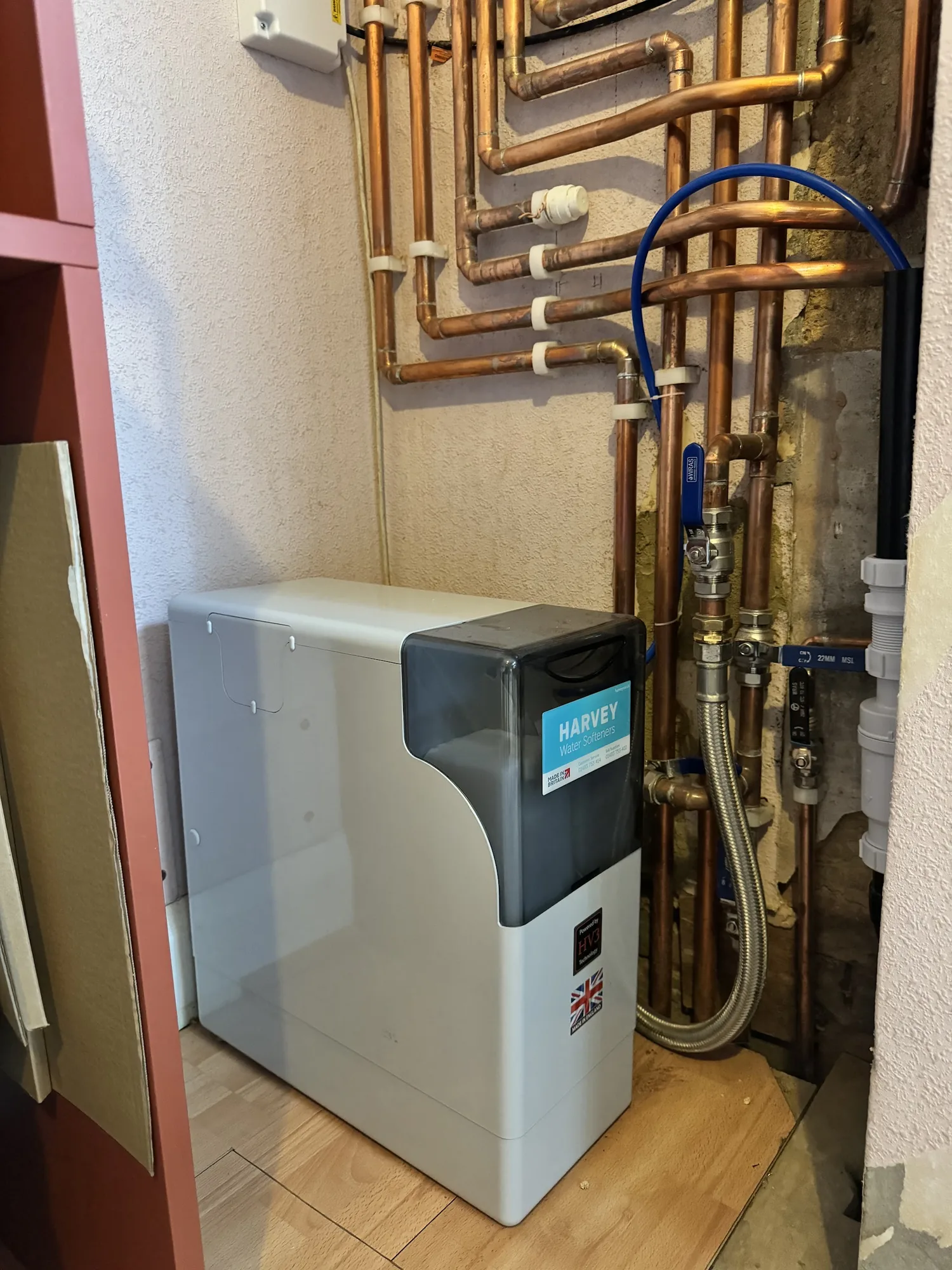
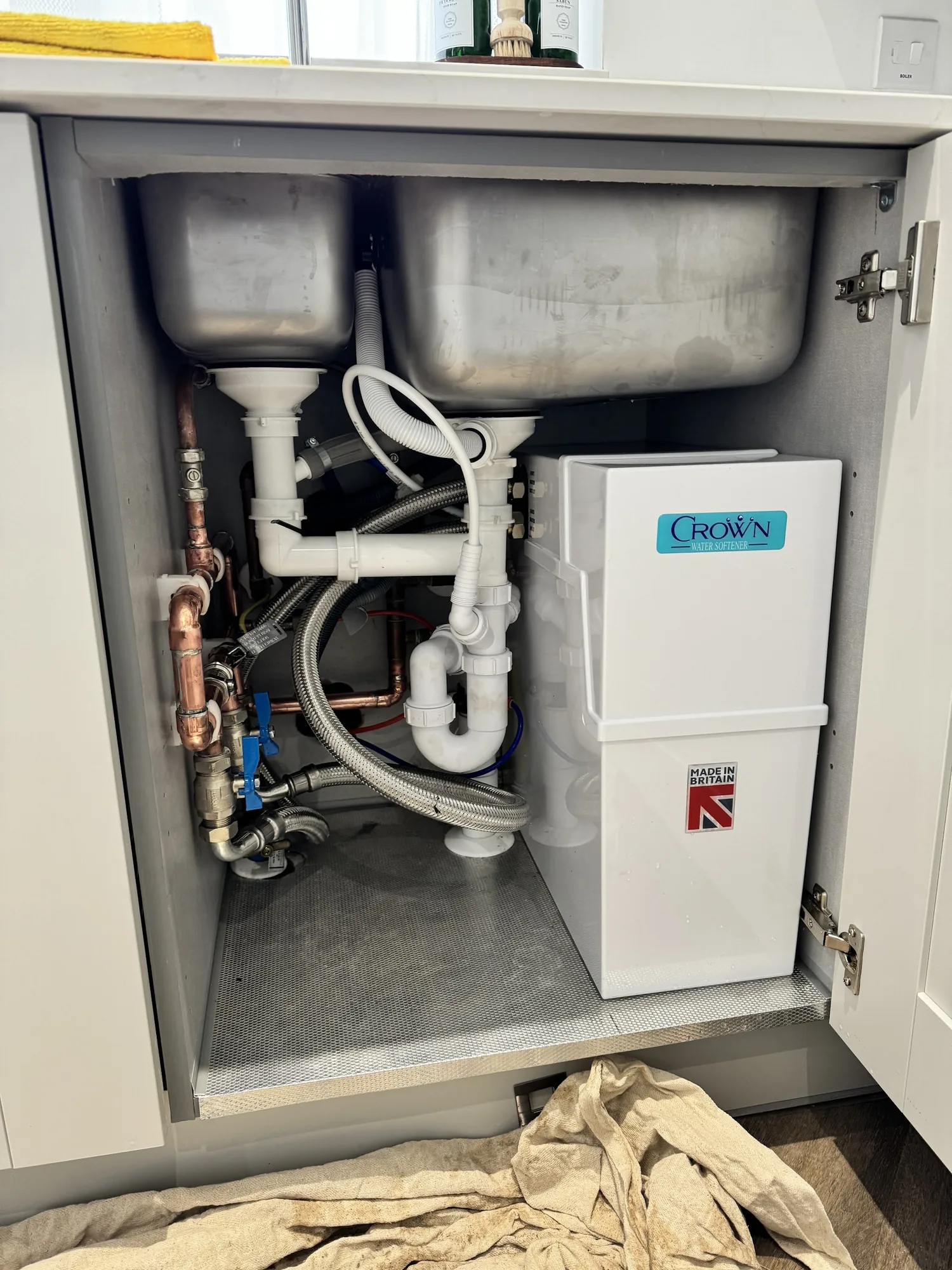
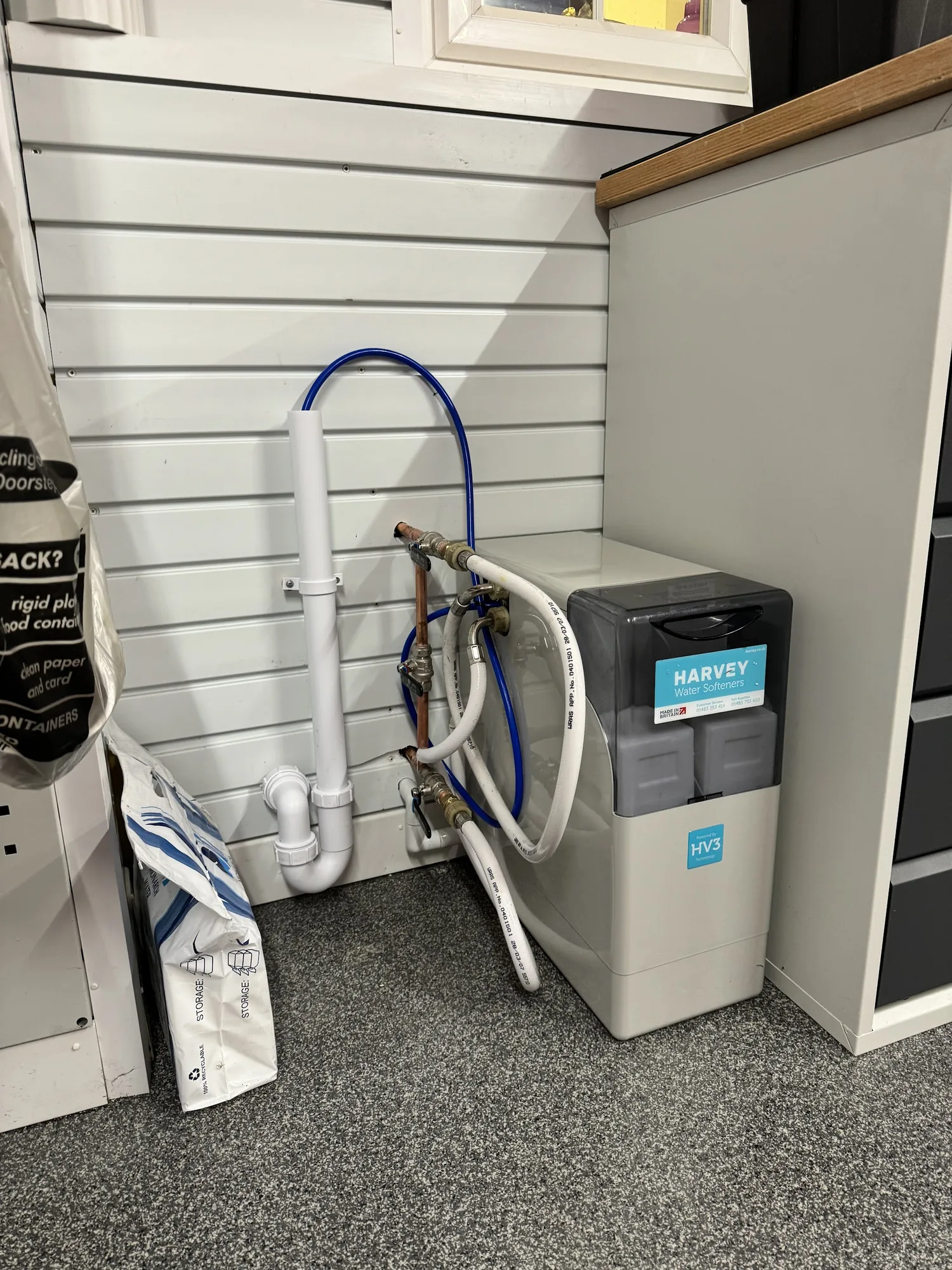
Water softener installation prices run from £800 to £2,000. The price varies depending on the unit specified and the complexity of the pipework. The softener is typically installed under the kitchen sink or in a utility room and connects to the incoming cold water supply. It uses a small amount of salt to regenerate, which needs topping up periodically. Thomas will explain how the unit works and what upkeep it needs when he installs it.

PRICE GUIDE £800 – £2,000
Typical fit Under sink
Upkeep Salt top-ups
BENEFIT Protects your boiler
Essex water Notably hard
Coverage Essex, Herts & London

Frequently Asked Questions

Water Softeners Questions

What areas do you cover?

Thomas covers Stansted, Saffron Walden, Newport, Bishop's Stortford, Dunmow, Sawbridgeworth, Hertford, Harlow, Epping, Loughton, into London, and the wider M11 and M25 corridor. If you're not sure whether you're within range, call 07774 323248 and Thomas will let you know.

How do I get a quote?

Call 07774 323248 or use the contact form. For most installation jobs, Thomas needs to visit the property before quoting, so the sooner you get in touch, the sooner he can arrange a visit.

Can you issue landlord gas safety certificates?

Yes. Thomas issues CP12 landlord gas safety certificates and is qualified for both Natural Gas and LPG appliances.

What are your opening hours?

Monday to Friday 8:30am to 6pm, and Saturday 9am to 1pm. Thomas answers the phone during working hours and calls back if he misses you.

Is this a one-person business?

Yes. Thomas carries out all the work himself, usually with a young apprentice who he trains to the same standard. When you call to discuss a job, you're speaking to Thomas directly, not a call centre.

How often should I service my boiler?

Once a year. Annual servicing keeps the manufacturer's warranty valid and catches problems before they become breakdowns. Most people book a service in autumn, before the heating runs hard through winter. If you're in the Bishop's Stortford or Stansted area, Thomas can help with that.

How long does a boiler installation take?

Most straightforward replacements take one day. If you're changing boiler type, for example moving from a back boiler to a combi, or if there's significant pipework work involved, it may take two days. Thomas will give you a realistic timeframe when he visits to quote.

Can I stay in my home during the installation?

Yes. You won't have heating or hot water during the work, but the property is habitable throughout. In most cases the new boiler is commissioned and running by the end of the same day.

Does a new boiler come with a warranty?

Most new boilers include a manufacturer's warranty, typically ranging from two to ten years depending on the brand and model. Thomas will register the warranty on your behalf as part of the installation process.

My boiler keeps losing pressure. Does it need replacing?

Not necessarily. Pressure loss is often caused by a small leak in the system or a failing pressure relief valve, both of which can be repaired. Thomas will diagnose the cause. If it's a repair job rather than a replacement, he'll tell you.

What boiler brands do you install?

Thomas installs a range of reliable makes. The right brand for your home depends on the system type, your budget and availability. He'll give you his honest recommendation rather than defaulting to the most expensive option.

How often should I service my boiler?

Once a year. Annual servicing keeps the boiler operating safely and efficiently, and helps maintain most manufacturer warranties.

What are the signs my boiler may need repairing?

Common signs are no heating or hot water, low boiler pressure, unusual noises such as banging or whistling, leaks from the boiler or pipework, radiators not heating properly, the boiler repeatedly switching off, or a fault code showing on the display.

How long does a boiler service take?

A standard boiler service usually takes around 45 to 90 minutes, depending on the type and condition of the system.

Can regular servicing help reduce energy bills?

Yes. A properly maintained boiler runs more efficiently, which can help reduce energy usage and heating costs.

Do you work on all boiler brands?

Thomas works on most major boiler manufacturers and domestic heating systems.

What happens during a boiler service?

Thomas checks the boiler and controls, inspects for leaks or corrosion, tests gas pressures and safety devices, cleans key components where required, checks the flue and combustion performance, and confirms the system is operating safely and efficiently.

Why does my boiler keep losing pressure?

Pressure loss can be caused by leaks, faulty components, recently bled radiators, or expansion vessel issues. Thomas will diagnose the cause and recommend the correct repair.

Is it worth repairing an old boiler?

It depends on the boiler's age, condition and the cost of the repairs. Thomas always gives honest advice on whether a repair or a replacement is the better long-term option.

Do you offer landlord boiler servicing?

Yes. Thomas carries out boiler servicing and gas safety inspections for landlords and rental properties, and issues CP12 landlord gas safety certificates.

Can you help if my heating keeps getting air or sludge problems?

Yes. Ongoing circulation or blockage issues are often linked to sludge, poor system design, failing components, or a lack of filtration. Thomas can investigate and recommend suitable solutions, such as a power flush or a magnetic filter, to improve system performance.

What is a power flush?

A power flush is a professional cleaning process that removes sludge, rust and debris from a central heating system using specialist equipment and cleaning chemicals.

How long does a power flush take?

Most power flushes take between one and two days, depending on the size and condition of the system.

Will a power flush fix cold radiators?

In many cases, yes. Sludge build-up is one of the most common causes of radiators heating unevenly or staying cold at the bottom.

Is power flushing messy?

No. The process is carried out using specialist equipment connected directly to the heating system, and Thomas takes care to protect the work area and keep disruption to a minimum.

How do I know if my system has sludge?

Common signs are black water when bleeding radiators, noisy pipework, poor circulation, repeated pump issues, or radiators with cold spots.

Can power flushing improve boiler efficiency?

Yes. Removing restrictions and improving circulation helps the heating system run more efficiently and reduces unnecessary strain on the boiler.

Do all heating systems need a power flush?

Not always. Thomas assesses each system individually and only recommends a power flush if it is genuinely needed.

What protection should be added after a power flush?

Thomas normally recommends adding inhibitor and, where suitable, fitting a magnetic filter to help keep the system clean and protected going forward.

Can old systems be power flushed safely?

In many cases yes, but older systems are always assessed carefully first. Thomas carries out checks beforehand to make sure the most suitable approach is used.

What's the difference between a power flush and a chemical flush?

A power flush uses specialist machinery to create high flow rates through the system for a more intensive clean. A standard chemical flush is gentler and is often carried out during a boiler installation.

Why does my AGA keep going out?

The most common causes are dirty injectors or a failing thermocouple. Dirty injectors restrict the fuel supply and cause the burner to cut out. A thermocouple on its way out fails to hold the gas valve open consistently, so the burner drops. Both are dealt with as standard during an annual service.

How often should an AGA or Rayburn be serviced?

AGA and Rayburn both recommend annual servicing. The appliances that cause the most trouble are the ones that haven't been looked at in several years. A yearly service keeps injectors clean, replaces the thermocouple before it fails, and checks the flue is clear.

Do you service LPG appliances as well as mains gas?

Yes. Thomas is qualified for both Natural Gas and LPG work. If you're on an LPG bulk tank or a domestic cylinder supply, he can service your appliance without any issue. He doesn't cover oil-fired models.

Can I use my AGA while it's being serviced?

The appliance needs to cool before Thomas can work on it safely. For a traditional AGA that runs constantly, this means planning ahead. He can advise on timing when you book, and he'll relight and test the appliance fully before he leaves.

Is servicing worth it if the AGA is quite old?

Generally yes, up to a point. A well-maintained AGA can run for a very long time. Thomas will give you an honest view on whether the appliance has more years in it or whether it's approaching the end of its useful life. He won't recommend a service just for the sake of it if the appliance is beyond practical repair.

Does a smart thermostat work with underfloor heating?

Yes, and it's particularly valuable. Because underfloor heating takes longer to reach temperature than radiators, a smart thermostat that learns the warm-up time will start heating well ahead of when you need it. The result is a room at the right temperature when you want it, without wasted running time.

Can underfloor heating go under any floor finish?

Most floor finishes are compatible, including tile, stone, engineered wood and vinyl. Solid wood is less suitable because it can expand and contract with the heat. Thomas will advise on floor finish compatibility when you discuss the project.

Is wet underfloor heating expensive to run?

Wet systems run at lower water temperatures than radiators, which means the boiler runs more efficiently. Running costs depend on insulation, floor area and how the system is controlled. A properly designed and insulated installation typically runs at lower cost than a comparable radiator system in the same space.

Can underfloor heating be retrofitted into an existing home?

Yes, but it involves more work than installing during a build. Retrofitting usually means lifting existing floors, which adds cost and disruption. It's worth discussing with Thomas whether it's practical for your specific property.

Does underfloor heating replace radiators entirely?

In the rooms where it's installed, yes in most cases. Thomas designs the system so that the underfloor circuit is the primary heat source for those rooms. In some older or poorly insulated properties, supplementary heating may still be needed, but he'll advise on this as part of the design.

Why do I need a water softener in Essex?

Essex has consistently high water hardness. Limescale builds up inside boilers, washing machines, dishwashers and cylinders over time, reducing efficiency and shortening their working life. A water softener removes the minerals that cause scale before they reach your plumbing, protecting those appliances for the long term.

Where is the water softener installed?

Most units are installed under the kitchen sink or in a utility room, close to where the cold water supply enters the property. The unit is plumbed into the cold supply and requires a drain connection for the regeneration cycle. Thomas will identify the best location when he visits.

Does soft water taste different?

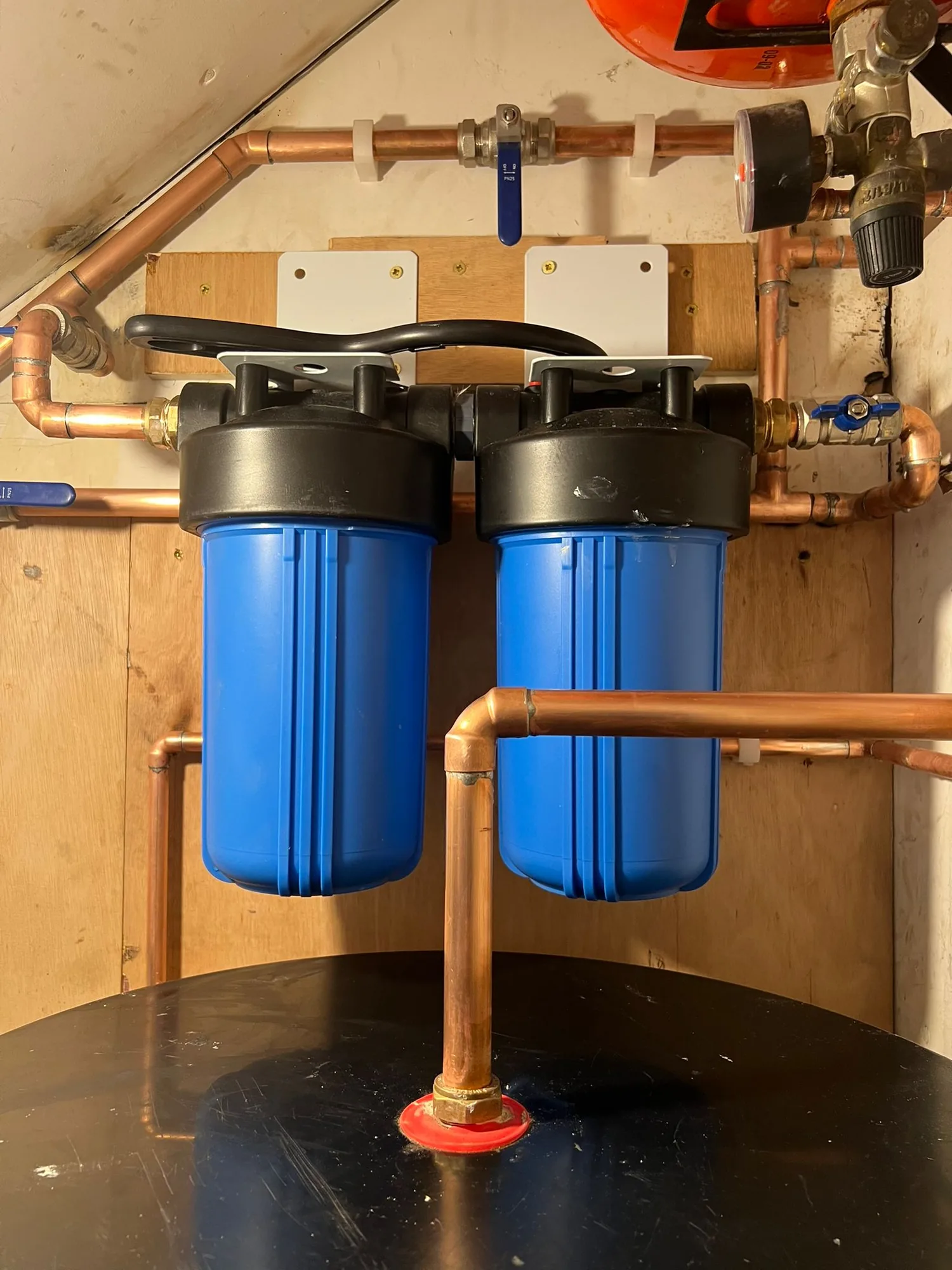
The softener typically bypasses the drinking water tap, which stays connected to the untreated cold supply. That means your drinking water is unaffected. Some people choose to add a separate filter to the drinking tap, which Thomas can also supply and fit.

How much maintenance does a water softener need?

The main ongoing task is topping up the salt. Most households need to do this once every four to eight weeks, depending on water usage. Beyond that, the units are low maintenance. Thomas will explain what to watch for when he installs it.

How much does water softener installation cost?

Prices run from £800 to £2,000 depending on the unit and the installation requirements. Thomas visits the property and gives a fixed quote before any work is agreed.

Why is my hot water cold or running out quickly?

Two common causes. On a direct system, the immersion heater may have failed. These can be replaced without necessarily replacing the cylinder. On an indirect system, where the boiler heats the cylinder via the coil, a failed motorised valve stops hot water reaching the cylinder properly. Thomas can diagnose which it is and advise on the most practical fix.

What's the difference between a vented and unvented cylinder?

A vented cylinder works with a cold water tank in the loft and operates on gravity pressure. An unvented cylinder connects directly to the mains supply and typically gives better water pressure throughout the house. Unvented systems require installation by a qualified engineer because they operate at mains pressure with safety devices that must be set correctly.

How long does a cylinder replacement take?

Most replacements are carried out in one day. Thomas will confirm the timeframe when he quotes. You won't have hot water during the work, but you'll have it back the same day in most cases.

How long should a hot water cylinder last?

A well-maintained copper vented cylinder can last 20 to 25 years. Unvented cylinders typically last 15 to 20 years, though hard water areas like Essex can shorten that if the water hasn't been treated. If you're installing a new cylinder, it's worth considering a water softener at the same time.

Do I need a cylinder if I have a combi boiler?

No. Combi boilers heat water on demand and don't use a stored cylinder. However, if your home has more than one bathroom or high hot water demand, a system or heat-only boiler with a cylinder often performs better in practice. Thomas can advise on whether your current setup is right for your home's needs.